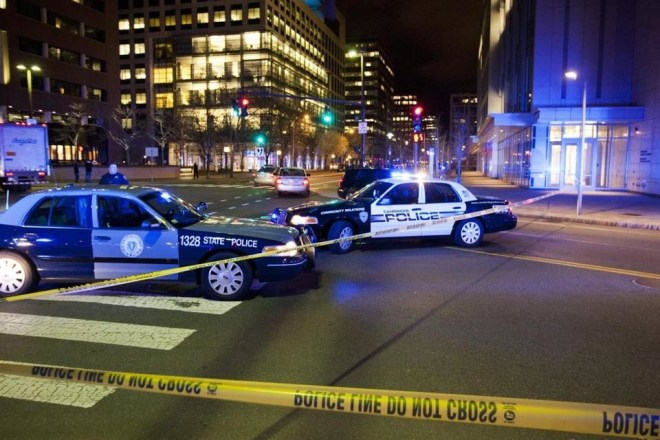
I had dealt with murders, stabbings, and the aftermath of the infamous “the Cambridge Police acted stupidly” incident where President Obama spoke out against the department and created a media frenzy. Those scenarios were all crises in their own right, but nothing compared to the crush of media attention that occurred during and after the events of the Boston Marathon bombing.
Crisis PR is all about putting systems in place ahead of time so that when events occur, you have the flexibility to react at a moment’s notice. Previously set systems give you the time you need to think on your feet throughout the minutes, hours, days, and even weeks while the situation unfolds.
The systems I had in place at the Cambridge Police Department may seem trivial, but they were invaluable for maintaining organization and the release of appropriate information when the time came. First, I made it a point to be the ONLY point of contact for the media on a daily basis. All media were given my name, email, and office line to contact when they had questions or needed access to any information from the police department. On our social media accounts, I was the ONLY person who had access to post updates and make edits.
By following protocol, information was never “leaked” by “anonymous sources” at the department, and conflicting or off-message statements were never released. If media did reach out via phone or email to other members of the department, everyone (including officers on the street) knew to give them my number or say that they needed to contact me for more information.
When the Boston Marathon bombing occurred, Cambridge Police were initially spared the crush of media attention as the incident happened in Boston and did not involve any Cambridge residents or members of the department. That all changed on the night of April 18, when Massachusetts Institute of Technology (MIT) Police Officer Sean Collier was gunned down in his cruiser on the MIT campus in Cambridge.

All of the national media that had been camped out in Boston’s Copley Square since the bombs went off immediately flooded into Cambridge to cover the murder. Shortly after, the Tsarnaev brothers hijacked a vehicle, led the police on a high-speed chase through Watertown, threw bombs and exchanged gunfire with officers on the street in a residential neighborhood. We all know how that story ends, but Officer Collier’s murder and the discovery that the Tsarnaevs were Cambridge residents were factors that led the Cambridge Police, and myself, to be ensnarled in the larger media circus that the Boston Marathon bombing and aftermath had become.
Did I mention that I was away in Toronto, Canada when this all unfolded? I had gone to visit friends and flown out of Logan Airport minutes after the FBI released photos of the suspects in the bombing. Of course, I was unaware that they would later be found to be living in Cambridge. Within hours of landing in Toronto, I began receiving updates from the Cambridge Police alerting me of the events that were unfolding. From that moment forward, I was on my phone responding to media and coordinating remotely with Cambridge Police Commissioner Robert Haas, his Command Staff, the City Manager, and my counterparts at the Massachusetts State Police, Boston Police, and FBI. I did not sleep that night or the next day as I worked to coordinate information with my counterparts and respond to media inquiries, even if it was to tell reporters that I didn’t know (or couldn’t release) the information they were seeking. This also involved updating the public about the work the police were doing to keep them safe.
The systems I had in place allowed me to access my office phone line, emails, voicemails, and update the department’s social media and alert systems remotely from just my iPhone. Anyone contacting the department or following us on social media could get the information they needed seamlessly, unaware that I was not in the office.These were not systems put into place by fiat when a past crisis occurred, but instead had been developed over three years to build the department’s trust in the system. They allowed my uniformed counterparts at the police department to focus on their most important tasks; coordinating with the FBI, protecting the city, and aiding in the investigation of Officer Collier’s murder and the manhunt for Dzhokhar Tsarnaev in Watertown.
Having said that, in a crisis this size there is no replacement for being on the ground in the eye of the storm. After doing all I could remotely, the Police Commissioner and I decided to cut my trip short and I jumped on the next flight back to Boston. Upon arriving, I hopped into a police cruiser and spent the next 72 hours at the Cambridge Police Department.
At one point during that whirlwind weekend, I had a combination of 700 emails, voicemails, and inquiries that I needed to attend to, alone, as a one-man communications team. Without the systems I had in place and had I not been the only point of contact for media, this crisis could have been devastating for the department, its reputation, and even the safety of our officers and the larger Cambridge community.
I am honored to have served the Cambridge Police Department and the City of Cambridge during this trying time, and am proud that both the City of Cambridge and the FBI acknowledged my contributions by naming me an Outstanding City Employee and awarding me with the Outstanding Service Award from the U.S. Department of Justice.

 Riviello Communications